Helping Your Child Understand Their Thoughts, Feelings, and Actions: A CBT Exercise for Parents
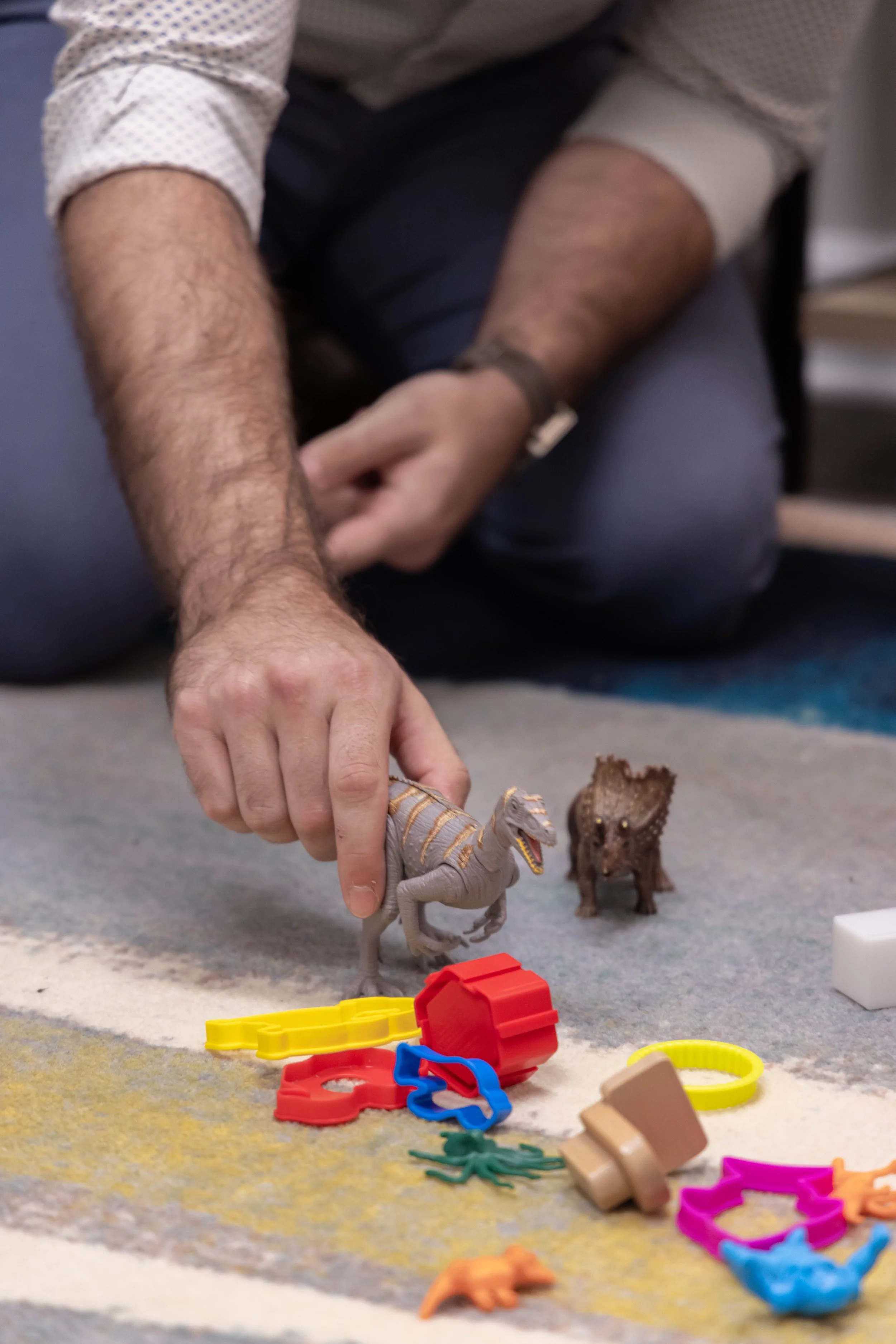
As parents, one of the greatest gifts we can give our children is the ability to understand themselves. When children learn how their thoughts influence their feelings and actions, they gain valuable skills for emotional regulation, problem-solving, resilience, and self-awareness.
One of our favorite ways to teach this concept is through a simple Cognitive Behavioral Therapy (CBT) activity that turns emotional learning into a game. Whether you're a parent, caregiver, coach, or educator, this exercise can help children better understand their emotional experiences while having fun in the process.
What is CBT?
Cognitive Behavioral Therapy (CBT) is an evidence-based approach that helps people recognize how their thoughts influence their emotions and behaviors.
The basic idea is simple:
Thoughts → Feelings → Actions → Consequences
When we become aware of our thoughts and learn to challenge or reframe unhelpful thinking patterns, we often experience changes in how we feel and how we respond to life's challenges.
As psychologist William James famously said: "Thoughts become perception, perception becomes reality."
And Wayne Dyer reminds us: "Change the way you look at things and the things you look at change."
Teaching CBT Through "Running the Bases"
Children often learn best when they are moving, playing, and actively participating.
One of our favorite ways to teach CBT is through a baseball or kickball analogy where children literally "run the bases" of their thoughts, feelings, actions, and consequences. Each base represents an important step in understanding what happened during a difficult situation.
The Pitch: The Situation
Every emotional experience starts with a situation.
Maybe a friend didn't sit with them at lunch.
Maybe a sibling took a toy.
Maybe they got a disappointing grade.
The situation is the "pitch" thrown to the child.
First Base: Thoughts
After something happens, children immediately begin telling themselves a story about what it means.
These are often automatic thoughts that happen so quickly they barely notice them.
If your child struggles to identify their thoughts, try asking:
What was your brain telling you about yourself?
What were you saying in your mind about the situation?
What were you thinking about the other person?
What was the first thing that popped into your head?
Examples:
"Nobody likes me."
"They did that on purpose."
"I'm bad at this."
"This isn't fair."
Helping children identify these thoughts is often the most important step in the process.
Second Base: Feelings
Thoughts create emotions.
Once your child identifies their thought, ask them what emotion followed.
A feelings wheel or feelings chart can be extremely helpful here, especially for younger children.
We also encourage parents to use scaling questions:
"On a scale of 1-10, how angry were you?"
"How worried were you?"
"How embarrassed did you feel?"
Using numbers helps children become more aware of their emotional experiences and allows them to notice progress when they revisit the situation later.
If their anger goes from a 10 to a 6 after discussing it, celebrate that progress.
You might ask:
What is different about a 6 versus a 10?
What feels easier when you're at a 6?
How would your day be different if your anger stayed at a 6 instead of a 10?
These conversations help build emotional insight and self-awareness.
Third Base: Actions
Next, explore what your child actually did.
This is where many children want to give the "right" answer.
Instead of accepting polished responses immediately, encourage honesty.
For example, rather than: "I would tell the teacher."
You might ask: "If someone was thinking 'that kid is so mean' and feeling angry at an 8 out of 10, what would they most likely want to do?"
This helps children recognize the connection between thoughts, feelings, and behavior without shame or judgment.
The goal is awareness, not perfection.
Home Plate: Consequences
Every action has a result.
Consequences are simply what happens after an action. They are not always negative.
Ask your child:
What happened after you did that?
What could happen if someone chose that action?
What happened next?
Helping children connect actions and outcomes encourages responsibility and critical thinking.
One important lesson is that consequences are something we help create through our choices.
This is not about blame. It is about helping children understand their own power and influence.
Going Back Through the Bases: Practicing Reframes
Once you've walked through the original sequence, invite your child to "run the bases" a second time using a different perspective.
Sometimes changing a thought changes everything.
Other times, a situation is genuinely difficult and requires additional coping skills.
Either way, the goal is to increase flexibility in thinking.
Here are several helpful reframes parents can teach:
Point Out the Positive
Ask:
What is one positive thing about this situation?
Practice Gratitude
Ask:
What are you grateful for right now?
Consider the Opposite Thought
Examples:
"They did that on purpose" → "Maybe it was an accident."
"They hate me" → "Maybe they were having a bad day."
"They're making fun of me" → "Maybe that's not what they meant."
Look Through a Lens of Kindness
Ask:
What is one kind thing this person has done?
What is a kinder way to view this situation?
Explore Forgiveness
Ask:
What would you say to a friend who made this mistake?
How would a forgiving friend respond?
Stick to the Facts
Encourage your child to describe only what happened.
No assumptions.
No judgments.
No mind-reading.
Just facts.
Assume Positive Intent
Ask:
If there was a good reason they did that, what could it be?
Use Time Perspective
One of my favorites:
How mad will you be in 5 minutes?
5 hours?
5 days?
5 months?
5 years?
You can even make it silly:
500 years?
5 million years?
Humor often helps children gain perspective.
Ask "What Would They Do?"
Try:
What would your favorite superhero do?
What would Jesus do?
What would a wise friend do?
Focus on Control
Ask:
What is in your control?
What is outside your control?
Identify Support
Ask:
Who can help you with this?
Think Through the Action
Help your child explore outcomes before acting.
Ask:
What would happen if you hit them?
What would happen if you lied?
What would happen if you avoided the problem?
What would happen if you asked for help?
The Goal Isn't Perfect Thinking
It's important to remember that this exercise is not about convincing children that every situation is positive.
Some situations are painful.
Some emotions are completely appropriate.
The goal is simply to help children become more aware of the relationship between their thoughts, feelings, actions, and outcomes.
When children develop this awareness, they gain a powerful tool they can use throughout their lives.
By helping your child "run the bases" regularly, you're teaching emotional intelligence, resilience, responsibility, and problem-solving skills that will serve them well long after childhood.
And the best part?
They often learn it while having fun.
Here at Atlanta Wellness Collective, we want to help. For support, contact us or schedule an appointment online.
This blog post was written by Andrew Wallace.
This blog is not intended to substitute professional therapeutic advice. Talk with your healthcare provider about your health concerns and before starting or stopping therapies. No content on this site, regardless of date, should ever be used as a substitute for direct professional advice from your doctor or other qualified clinician.
VISIT US ON INSTAGRAM @atlwell