Raising Resilient Kids: Empowerment, Play, and Parenting in Today’s World
In a world that feels increasingly unpredictable, many parents and caregivers are asking the same question: How do we raise resilient kids?
Resilience isn’t about shielding children from hardship or raising kids who never struggle. It’s about helping children develop the capacity to cope, adapt, and grow through challenges.
Resilience is not something children are simply born with. It is cultivated over time through relationships, play, structure, and community. Resilient kids emerge stronger, more confident, and more connected on the other side.
What Resilience Really Is (and Isn’t)
Resilience is best understood as a capacity, not a personality trait or an end goal. It’s the ability of a child, and a family system, to cope, learn, and thrive in the face of adversity.
Just as importantly, resilience is not:
The absence of struggle
Avoiding or removing challenges
A measure of toughness or independence
Something achieved once and for all
Resilience grows through experience, especially when children face difficulty with support.
Risk and Protective Factors: What Shapes Resilience?
Children don’t grow in a vacuum. Their resilience is shaped by both risk factors and protective factors.
Risk factors can include experiences such as trauma, bullying, discrimination, family loss, economic stress, or instability in caregiving relationships. These experiences don’t doom a child, but they do increase vulnerability.
Protective factors, on the other hand, act as buffers. These include:
Stable, nurturing relationships
Positive peer connections
Supportive school and community environments
Temperament strengths and problem-solving skills
The encouraging truth? Protective factors can be strengthened at any stage of development.
The Family as the Foundation of Resilience
Families function as a child’s emotional immune system. Research consistently shows that secure attachment — built through thousands of everyday interactions — is one of the strongest predictors of resilience.
This doesn’t require perfection. It requires:
Attunement: noticing and naming a child’s needs
Nurture: responding with care and empathy
Structure: providing safety through clear expectations and boundaries
Challenge: allowing children to stretch, try, fail, and try again
Authoritative parenting, high warmth paired with consistent structure, creates the conditions where children feel both safe and capable.
Open Communication and a Strengths-Based Home
Resilient families tend to share a few key practices:
Open communication that brings problems into the light
Shared family values and expectations
Healthy routines around sleep, movement, and responsibility
A commitment to play
A positive outlook that reframes mistakes as opportunities for growth
Shifting language from “What’s wrong?” to “What’s going on underneath this behavior?” can dramatically change how children experience discipline and correction.
Why Play Is So Powerful
Play is not optional. It’s essential.
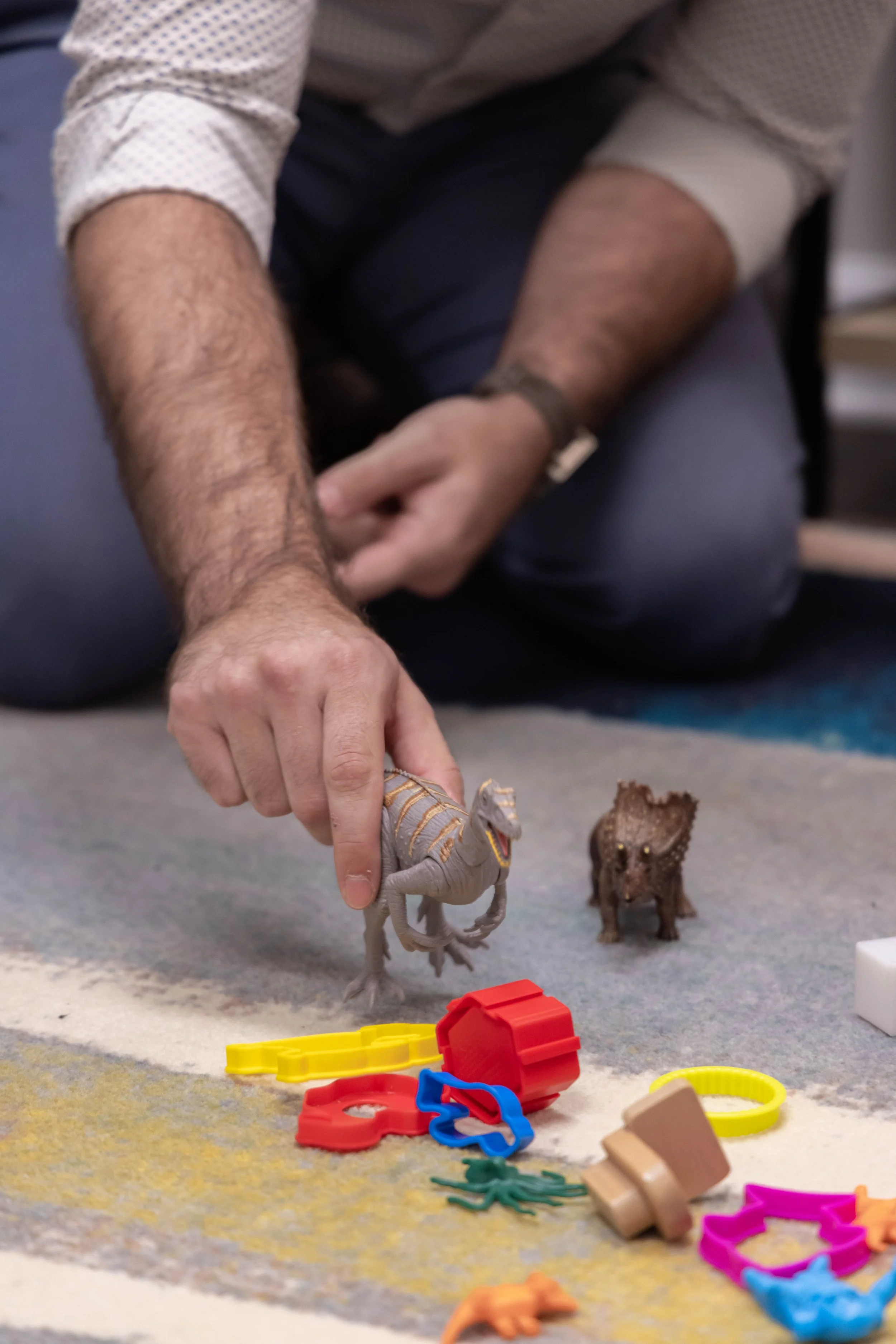
Children process emotions through play long before they can articulate them with words. Play meets kids at their developmental level and allows them to work through fear, frustration, joy, and connection in ways talking alone cannot.
Play also strengthens relationships, which is the true engine of growth. Whether through imaginative games, movement, or shared laughter, play communicates safety, presence, and delight.
Don’t say it — play it.
Empowering Kids Through Skill-Building
Resilience is reinforced when children experience themselves as capable. Empowerment grows when adults:
Encourage problem-solving rather than rescuing
Offer limited choices instead of open-ended demands
Model emotional regulation through co-regulation
Focus encouragement on effort and process rather than outcomes
Phrases like “You’re working really hard” or “You’re trying different solutions” build self-efficacy far more than praise focused solely on success.
The Role of Community in Raising Resilient Kids
Resilience is not built by families alone. Communities matter.
Research shows that just one trusted adult relationship outside the home can significantly reduce a child’s risk for poor mental health outcomes. Schools, churches, teams, mentors, and community organizations all play a role in creating environments where children feel seen and supported.
Accessible mental health care, early intervention, and strong community partnerships aren’t luxuries, they are protective factors.
Moving Forward with Hope
Raising resilient kids doesn’t require having all the answers. It requires showing up consistently, staying curious, and remembering that growth happens in relationship.
Resilience is built in ordinary moments:
A calm response to a meltdown
A playful reconnection after conflict
A chance to try again
When we focus less on fixing children and more on strengthening the systems around them, we give kids the greatest gift possible: the confidence that they are not alone, and that they are capable.
-
Alvord, M. K., & Grados, J. J. (2005). Enhancing resilience in children: A proactive approach. Professional Psychology: Research and Practice, 36(3), 238–245.
Benzies, K., & Mychasiuk, R. (2009). Fostering family resiliency: A review of the key protective factors. Child & Family Social Work, 14(1), 103–114.
Cahill, H., Beadle, S., Farrelly, A., Forster, R., & Smith, K. (2014). Building resilience in children and young people: A literature review. University of Melbourne, Youth Research Centre.
Grotberg, E. H. (1995). A guide to promoting resilience in children: Strengthening the human spirit. Bernard van Leer Foundation.
King, G., Baxter, D., Rosenbaum, P., Zwaigenbaum, L., Bates, A., & Brown, E. (2006). A qualitative investigation of changes in the belief systems of families of children with autism or Down syndrome. Child: Care, Health and Development, 32(3), 353–366.
Masten, A. S., & Barnes, A. J. (2018). Resilience in children: Developmental perspectives. Children, 5(7), 98.
Oades-Sese, G. V., Cohen, D., Allen, J. W. P., & Lewis, M. (2021). Building resilience in young children the Sesame Street way. In S. A. Prince-Embury & D. H. Saklofske (Eds.), Resilience interventions for youth in diverse populations (pp. 123–143). Springer.
Zolkoski, S. M., & Bullock, L. M. (2012). Resilience in children and youth: A review. Children and Youth Services Review, 34(12), 2295–2303.
Here at Atlanta Wellness Collective, we want to help. For support, contact us or schedule an appointment online.
This blog post was written by Andrew Wallace.
This blog is not intended to substitute professional therapeutic advice. Talk with your healthcare provider about your health concerns and before starting or stopping therapies. No content on this site, regardless of date, should ever be used as a substitute for direct professional advice from your doctor or other qualified clinician.
VISIT US ON INSTAGRAM @atlwell